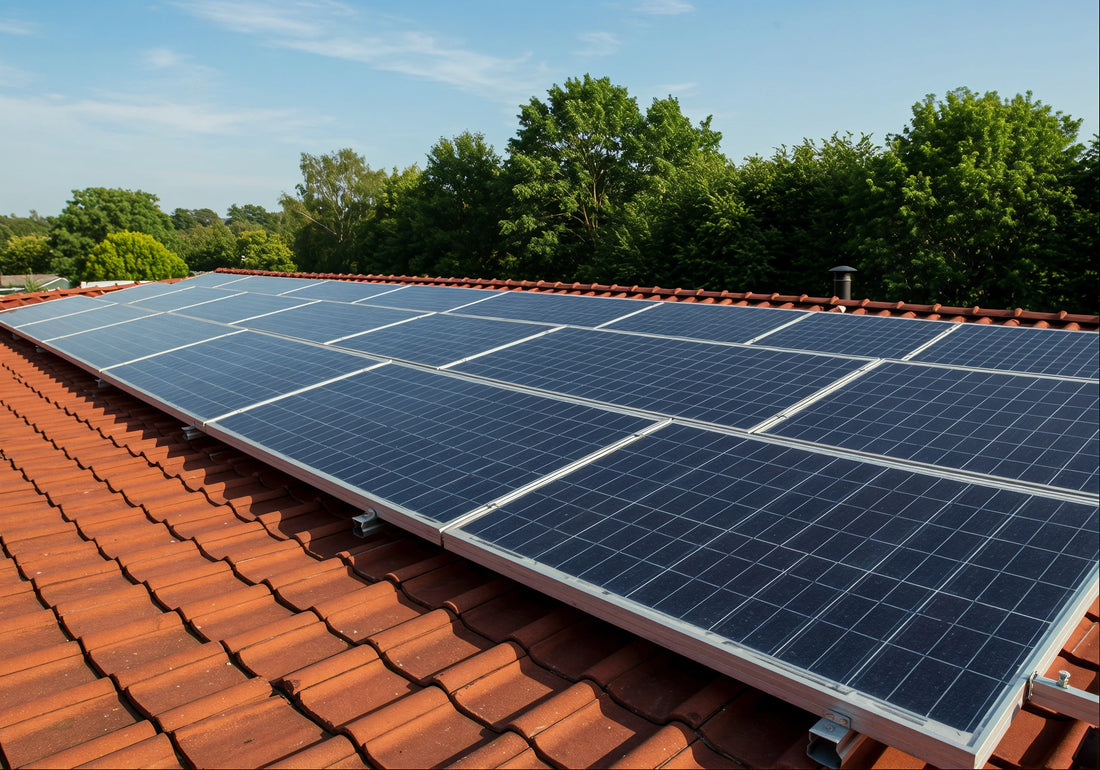
Picking the right racking hardware shapes how long a solar installation lasts. Among the options available to U.S. installers, rail-based systems remain the most established. In this article, we’ll explain what is a rail-based solar mounting system, how it works, and where it fits best.
What Is a Rail-Based Solar Racking / Mounting System?
A rail-based solar mounting system uses long aluminum or steel rails fixed to the roof to support and secure a series of solar panels.
Here’s a quick explanation of how they are installed:
- Roof attachment feet are secured into rafters or trusses
- Metal rails are installed horizontally across the roof
- Solar panels are attached using mid-clamps and end-clamps
- Wiring and spacing are adjusted for alignment and airflow
Watch the RT-PLUS video to see how the mounting system is installed, explore its key features, and understand why it's designed for fast, secure, and reliable solar panel installations.
The entire array is mounted approximately 4-6 inches above the roof surface to increase airflow clearance, protect the panels from overheating, and provide easy access for PV wiring.
Rail-based systems have been the predominant solar mounting solution in the U.S. for decades. Their ability to distribute loads efficiently makes them especially effective in high-wind regions. But are they the right fit for your project?
Roof, Climate, or Crew: What Drives the Racking Decision
The right racking system depends on more than just the panels. It starts with the installation environment.
- Roof type: Rails handle shingle, tile, metal, and flat roofs, with tilt kits for low-slope surfaces.
- Wind and snow load: Continuous rails spread stress across many points, favored in storm-prone or heavy-snow regions.
- Crew familiarity: Most installers already know rails, minimizing training time.
- Wiring: The rail channel doubles as a clean conduit for cables and grounding hardware.
With those boxes checked, here's where rail-based solar racking is actually used.
From Rooftops to Ground Arrays: Where Rail Racking Shows Up
Rail-based systems are compatible with most common solar installation environments across the U.S.
- Metal roofs: Paired with standing-seam clamps or L-feet for penetration-friendly mounting.
- Concrete roofs: Combined with ballasted or penetrative attachments, with adjustable tilt.
- Ground-mount arrays: Set on steel structures for modular, large-scale layouts.
This range is why the rails remain among the most universal solar rail systems on the market.
Aluminum or Steel? Choosing the Right Rail Material
The right rail material depends on your project's structural and performance requirements.
Aluminum rails are lightweight, corrosion-resistant, and easy to handle on-site, so most residential jobs default to them.
Galvanized steel rails carry higher load capacity and suit heavy-duty or large commercial arrays, often at a lower per-foot cost on bigger builds.
Aluminum usually wins on rooftops because it eases structural strain, though steel is still preferred for large or high-load projects.
Installation Walkthrough: From Site Survey to Final Clamp
A systematic installation process helps ensure a secure and code-compliant PV system.
-
Site assessment: Evaluate roof condition, sun exposure, orientation, and tilt before laying out the array.
- Mount the rails: Secure the mounting feet to structural members (rafters or trusses, where applicable), then align and level the rails using the appropriate fasteners.
- Secure the panels: Position the modules with the required spacing and fasten them using compatible mid- and end-clamps.
- Wire and Ground: Route wiring neatly, secure cables, and bond and ground the system in accordance with applicable electrical codes.
A well-executed installation minimizes future maintenance and maximizes system lifespan.
Curious why most rooftop solar panels are mounted flat on rails instead of being tilted for maximum sun exposure? Explore this Reddit discussion where solar professionals and homeowners explain the design choices, structural considerations, and performance trade-offs: Why are solar panels mounted flat on rails?
Benefits of a Rail-Based Racking System
Rail-based systems remain popular because they combine structural reliability with installation flexibility.
- Superior wind load capacity with forces spread evenly across the PV rail structure
- High structural stability with reduced point-load stress on any single fastener due to the continuous rail
- Easy panel adjustment because the modules slide along the rail for precise alignment or future replacements
- Proven, trusted technology with an established track record across U.S. installations
- Versatile compatibility across panel brands, sizes, and roof types
Limitations of a Rail-Based Racking System
Despite their advantages, rail-based systems come with a few practical trade-offs.
- Heavier overall weight due to continuous rails, requiring structural evaluation before installation for older roofs
- Higher material and shipping costs due to long aluminum extrusions
- Complex installation process where rails must be set and leveled before panels are placed
- Visible, bulkier aesthetics that some property owners find too cluttered or intrusive
Conclusion
So, what is a rail-based solar mounting system in practical terms? It is a field-proven racking solution built for strength, durability, and broad compatibility. These qualities have made it one of the most trusted solar mounting options across U.S. installations.
Don't settle for one-size-fits-all. Select a system tailored to your precise site conditions to guarantee reliability and maximum energy output.