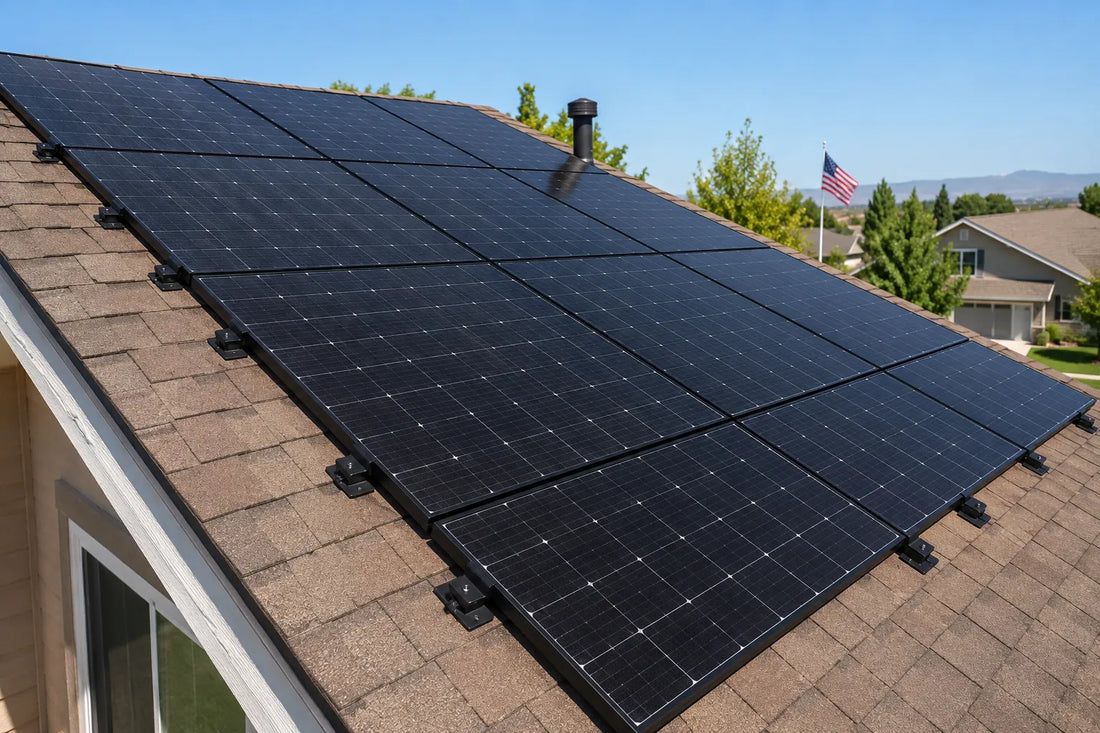
Rail-less solar mounting / racking has become a popular alternative to conventional rail-based systems, offering a lighter, simpler approach to rooftop installations. In this guide, we'll explore how it works, its benefits, and when it's the right choice.
What is a Rail-Less Solar Mounting / Racking System?
A rail-less system attaches solar panels to the roof with individual mounting brackets rather than continuous metal rails.
Key Features:
- Direct-attach brackets at each panel location, no shared rail
- Individual clamps securing each module frame independently
- Minimalist design with fewer visible components
Installation logic: Brackets fasten through the roof structure ➜ each panel sits on its own brackets ➜ clamps grip the panel frame edges to lock it in place.
Watch the RT-APEX Rail-less PV Mounting System video to see the complete installation process, product features, and how this rail-less mounting solution helps simplify rooftop solar installations.
Rail-less mounts reduce collateral roof load by roughly 85% versus traditional rail systems, helping homeowners avoid costly structural upgrades on older homes. They also require an estimated 90% less manufacturing energy and produce 85% lower shipping emissions, making solutions like RT-APEX a more sustainable choice.
Wondering whether rail-less solar mounting systems are reliable and how they compare to traditional rail-based systems? Check out this Reddit discussion where homeowners and installers share their experiences: Does anyone have solar panels that have a non-rail racking system?
Key Factors That Decide If Rail-less Racking Is Right
Not every project is suited for rail-less solar racking. Consider these key factors:
- Roof Type and Material: Best suited to composition shingle and metal roofs. Tile roofs need more precise installation and specialized hardware.
- Climate and Structural Load: In high-wind or heavy-snow areas, correct attachment spacing and structural calculations matter for long-term performance.
- Installation Efficiency: Once the crew is trained, rail-less racking reduces components and installation time by eliminating the need for rails.
- Finished Aesthetics: Sits closer to the roof for a clean, low-profile look.
- Wire Management: With no rail channels, wiring must be planned upfront using frame clips, junction boxes, or conduit.
Once these factors are considered, the next logical step is to understand the types of rail-less solar racking.
Types of Rail-less Solar Racking
Different rail-less solar mounting /racking systems suit different roof types and installation requirements.
- Direct-Attach Systems: Each panel mounts straight to the roof, resulting in fewer parts and faster installation.
- Shared-Attachment Systems: Multiple panels share roof attachment points, reducing penetrations and simplifying wiring.
- Hybrid Rail-less Solutions: Short rail sections or connectors add support while using less material than full rail systems.
- Roof-Specific Variations: Hardware varies by roof type, including shingle, tile, metal, and low-slope commercial roofs.
Knowing the type is only half the answer to “what is a rail-less solar racking system?” The other half is uncovered during installation.
The Rail-Less Installation Process
Planning matters even more since there's no rail to correct layout errors later. Before mounting, crews should map rafter locations, run a shading analysis, and plan the electrical pathway.
- Roof Preparation: Mark attachment points, install flashing where needed, and torque each attachment to spec.
- Module Installation: Start at the top and work down. Secure the first panel, connect each additional panel with coupling hardware, and check alignment throughout.
- Electrical Installation: Route wiring through frame-mounted clips, connect home-run cables to the combiner box or inverter, and verify grounding through the mounting hardware.
Among the various types of solar racking systems, rail-less systems typically need fewer tools, mainly an impact driver, standard layout tools, and fall-protection gear.
Advantages of Rail-less Solar Racking
Rail-less solar racking is a practical choice where speed, cost, and aesthetics matter most.
- Lower material costs: Less aluminum, fewer parts
- Faster installation: Fewer components, less labor
- Lightweight design: Suits older or weight-sensitive roofs
- Cleaner appearance: Minimal visible hardware
- Simpler logistics: Easier to transport and handle
Did You Know?
Rail-less mounting systems can reduce component requirements by nearly 35% and cut installation time by approximately 22% compared to traditional rail-based systems. Today, around 40% of new commercial rooftop solar installations across North America and Europe use rail-less mounting technology.
Drawbacks of Rail-less Solar Racking
While rail-less systems offer several benefits, they may not be the right choice for every project.
- Precise installation required: Accuracy is critical
- More wire planning: All wiring is done on the back of the modules
- Limited compatibility: Not all panels are rail-less approved
- Extra structural checks: Wind and snow loads may need closer review
- Learning curve: New crews need time to adapt
Conclusion: Where Rail-less Solar Mounting Is Headed
Faster installs and broader module compatibility drive wider adoption, especially for residential projects in the U.S. As hardware gets smarter and materials get stronger and lighter, rail-less mounting will continue to be defined by simplicity, efficiency, and clean aesthetics.