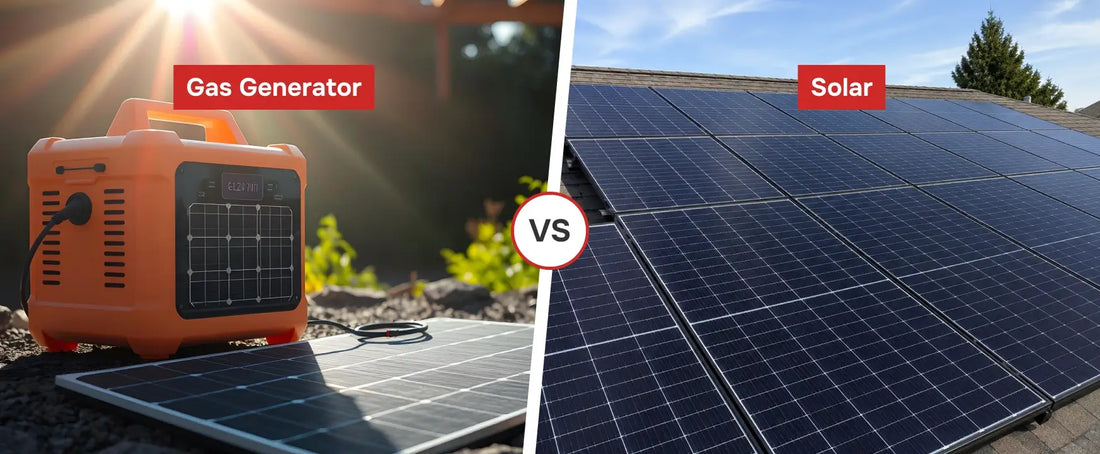
Backup power comes down to one decision: store solar energy in advance, or burn fuel on demand. That single choice opens the solar vs gas generator comparison, where both machines serve the same purpose but are built for very different scenarios.
Solar vs Gas Generator: Quick Comparison
Here’s a side-by-side comparison of the specifications buyers consider first:
| Factor | Solar Generator | Gas Generator |
|---|---|---|
| Power source | Solar panels, battery, inverter | Gasoline, propane, or dual fuel |
| Runtime | Battery-limited; recharges via sunlight | Runs as long as fuel is available |
| Power output | 300–5,000W+, expandable | 1,000–10,000W+, whole-home |
| Upfront costs | Higher | Lower |
| Operating costs | Low; no fuel required | $3–$5/gallon, plus oil and filters |
| Noise levels | Near-silent | Typically 60–90 dB |
| Maintenance | Minimal; occasional cleaning and system checks | Oil, filters, spark plugs, stabilizer, and fuel maintenance |
| Environmental impact | Zero emissions during operation | Carbon monoxide and other emissions |
| Best use cases | Indoor use, camping, short outages | Multi-day outages, pumps, HVAC, job sites |
| Key limitation | Depends on battery capacity and sunlight | Depends on fuel availability and safe outdoor placement |
Each option works best in different situations.
Solar vs Gas Generator: Key Differences That Matter
These six factors will shape which system fits your situation.
- Power Output and Starting Watts
Gas generators offer higher output, with portable models ranging from 1,000W to over 10,000W. A 7,500W model can handle the brief startup surge from refrigerators, well pumps, and AC compressors.
Solar generators typically offer less output. Models reaching 3,600W can run a refrigerator, furnace fan, and lights simultaneously.
- Cost of Ownership
Gas generators cost $500–$3,000 upfront. A 5,000W model uses about 0.75 gallons per hour at half load, costing around $70/day in fuel.
Solar generators with panels cost $1,000–$5,000 and have no fuel costs. They typically break even with gas in three to six years.
- Portability and Convenience
Gas generators above 4,000W need wheel kits, fuel storage, and outdoor or ventilated placement that complies with local fire codes.
Solar generators are plug-and-play. The battery, inverter, and charge controller are housed in a single unit, safe to carry indoors or into a tent without ventilation concerns.
- Noise and Emissions
Gas generators typically produce 60–90 dB of noise and emit carbon monoxide, so they must be operated outdoors and away from doors, windows, and vents. The National Fire Protection Association recommends keeping generators at least 20 feet from buildings.
Solar generators produce no direct emissions and make no sound beyond a cooling fan, which makes indoor operation safe by design.
- Maintenance Requirements
Gas engines require oil changes at fixed intervals, as well as air filters, spark plugs, and a fuel stabilizer for long-term storage. When properly maintained, they last about a decade.
Solar generators mainly need clean panels. LiFePO4 batteries can retain 80% of their capacity after 3,000–6,000 cycles, with minimal maintenance between cycles.
- Reliability During Power Outages
Gas generators depend on fuel supply. Stations lose power during regional outages, stored gasoline turns stale, and most units cannot run safely in rain or snow.
Solar generators depend on sunlight and battery capacity. Cloudy days or an undersized array can reduce runtime, though a permanent rooftop system with battery storage removes this limitation.
Curious about how solar generators compare to gas generators during power outages? Check out this Reddit discussion from r/solar, where users discuss solar power and gas generators for backup electricity, including their performance, reliability, and practical use during outages: How Does Solar Compare to Gas Generators for Power During Outages? (r/solar)
To explore deeper, let’s discuss use cases to determine which system is appropriate for you.
Solar vs Gas Generator Use Cases Compared
The right generator type depends first on your intended use case.
Home Backup Power
For outages under 12 hours, a 2,000–3,600W solar generator can power a refrigerator, router, lights, and medical devices without noise or fumes. For multi-day outages involving an electric heater or well pump, gas is often the better choice.
Pro Tip:
A permanent solar array with battery storage can provide more reliable and sustainable backup, and the roof vs. ground-mounted choice affects how much energy you can generate.
Camping and RVs
A solar generator is the practical choice. Many campgrounds charge permit fees and restrict gas generator hours, while a solar generator runs silently overnight and recharges in 3 to 6 hours of sunlight.
Job Sites and Heavy-Duty Equipment
A gas generator wins this category. Saws, compressors, and welders consume energy fast and continuously, and crews starting before sunrise cannot wait for daylight to charge a battery.
Emergency Preparedness
Match the equipment to the hazard. Solar can be useful during hurricanes when fuel supplies are disrupted, provided the array is rated for the high wind load. Winter storms increase heating demand and reduce sunlight, favoring a gas generator.
A charged solar battery stores energy indefinitely; untreated gasoline degrades within months.
How to Choose Between a Gas and Solar Generator?
Address these three factors in the given sequence:
- Consider Your Power Needs
Add the running watts of your essential devices, then account for the largest startup surge. This gives you the minimum generator output you need.
- Evaluate Your Budget
Compare the upfront costs of solar vs gas generators comprehensively. Tax credits and state rebates may reduce the cost of a solar system, reducing the initial price difference between them.
- Consider Operating Costs
Multiply your annual outage hours by fuel use and local gas prices. If you experience frequent outages, solar can reduce your budget on ongoing fuel costs. Solar PV converts sunlight directly into electricity, with no fuel needed during operation.
In the end, the best choice balances your power needs, budget, and ongoing expenses.
Conclusion
The solar vs gas generator decision is not about which technology is superior. It comes down to your power needs, outage duration, budget, and operating costs.
Solar offers quiet operation, minimal maintenance, and no fuel costs. Gas provides higher output and longer runtime when fuel is available. Many households in outage-prone regions keep both for maximum flexibility, running solar first and holding gas in reserve.