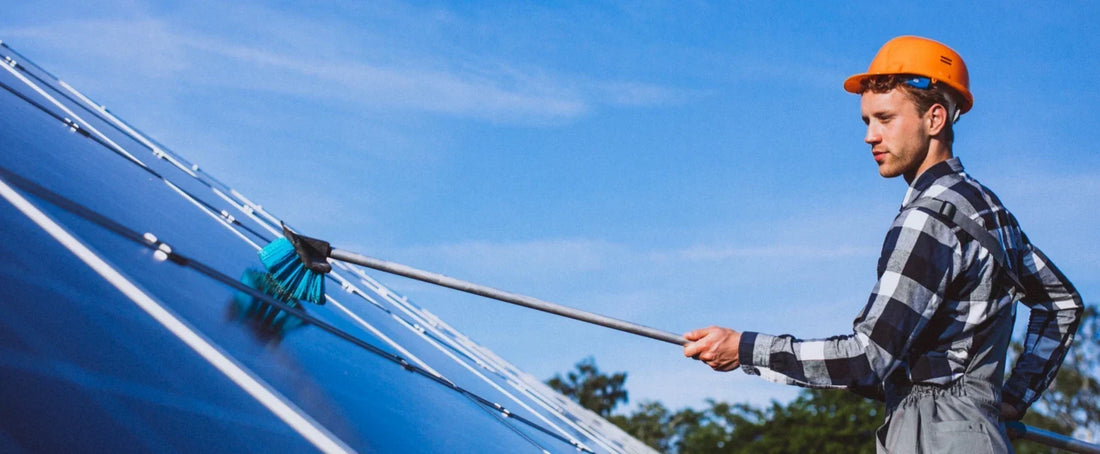
A roof-mounted solar array does most of its work untouched. It only asks for occasional maintenance because dust, pollen, and droppings block sunlight from reaching the cells. Here’s a quick guide on how to clean solar panels on the roof safely.
The Importance of Cleaning Your Solar Panels
Two things decide whether a wash is worth the effort: what is on the glass, and how long it has been there.
How Dust, Droppings, and Pollen Reduce Solar Output
Soiling on panels is like a dirty windshield. Sunlight stops at the dirt and never reaches the cells.
UC San Diego engineers tracked 186 California sites over 145 rainless days and measured a 7.4% efficiency loss from loose dust.
The same study found bird droppings cut off sunlight completely and never rinse off in rain. One shaded cell can drag down the output of every panel wired in series with it.
Signs Your Solar Panels Actually Need a Wash
Know your system instead of following a set schedule. Your array asks for a wash when:
- Output drops week over week, and the weather can't explain it
- You can see film, streaks, or droppings from the yard
- Wildfire smoke, a dust storm, or heavy pollen has just passed through
- Months have gone by without substantial rain
Interesting Read:
Practical Solar Panel Maintenance Tips to Protect Your Investment
Your Solar Panel Cleaning Checklist
The cleaning kit is short; the safety plan around it matters more.
Essential Tool List:
- Garden hose with a standard nozzle
- Soft-bristle brush or sponge on a telescoping pole
- Warm water with a few drops of mild dish soap
- Rubber-bladed squeegee
- Deionized water for the final rinse if tap water is hard
Pro Tip:
Hard water dries into mineral spots that shade the glass, while Deionized water evaporates cleanly.
Roof Safety Rules Worth Following
Work from the ground whenever the pole reaches the panels. That decision removes most of the risk.
But if you must go up:
- The American Ladder Institute advises extending the ladder at least 3 feet above the roof edge (eave) and securing the top before climbing.
- Wear rubber-soled shoes, as dew and damp surfaces get slippery.
- Never kneel or stand on a panel; the glass can develop microcracks under body weight.
- Call a professional if your roof pitch is steep or lacks an anchor point.
Want to see how other solar panel owners approach cleaning and routine maintenance? Check out this Reddit discussion from r/solar, where users share their experiences and methods for cleaning solar panels: What does everyone do to clean their solar panels? (r/solar)
How to Clean Solar Panels on the Roof: Step-by-Step Guide
The entire 5-step process takes under an hour on a small array:
Step 1: Shut the System Down
Follow your inverter manual’s shutdown sequence; usually disconnect AC first, then DC. Panels stay energized in daylight, so this protects you and the electronics around water.
Step 2: Clear Loose Debris First
Use a dry, soft brush to remove leaves, twigs, and dust. Check the gaps between panels for trapped debris and moisture, as grit can scratch glass.
Step 3: Wash with Water and a Soft Brush
Hose down with plain water first. Clean remaining dirt with a soft brush and warm, soapy water, using slow, straight strokes. Let droppings and sap soak instead of scrubbing hard.
Step 4: Rinse and Let Them Air Dry
Rinse from top to bottom so the water washes away the soap. Use a squeegee to reduce streaks, then let the panels air-dry. Avoid towels, as they can leave lint behind.
Step 5: Inspect Before You Come Down
Check for chipped glass, cloudy spots, or browning under the surface. Inspect frame corners and mounting hardware for loose sealant or standing water, which leads to leaks.
Interesting Read:
Four Cleaning Mistakes That Damage Panels
Each habit feels efficient in the moment but shortens the array's lifespan.
- A pressure washer exceeds the module glass's rating. Water forces past the frame seal, corrosion starts inside, and warranty claims get denied.
- Abrasive pads and stiff bristles like steel wool, scouring pads, and hard nylon leave fine scratches that scatter light and trap dirt.
- Panels washed in the afternoon can reach close to 150°F. Cold water on hot glass cracks it, and quick evaporation leaves water spots.
- Household chemicals like ammonia cleaners, bleach, vinegar, and degreasers damage the anti-reflective coating and edge sealant. Mild dish soap works better.
The Ideal Frequency of Cleaning Solar Panels
Once or twice a year covers most U.S. homes. Your real interval depends on four things:
- Rainfall: More rain means less frequent cleaning; dry Southwest climates need cleaning more often.
- Tilt: Steep roofs let dust slide off; flat ones let it settle.
- Surroundings: Trees, freeways, farm fields, and construction speed up soiling.
- Wildlife: Birds nesting under an array require immediate attention.
Pro Tip: Quick Cleaning Recommendations
- Check the manual first; some brands cap water temperature and pressure.
- Add an extra check after storms, smoke, or heavy pollen.
- Log the date and output to see what a wash recovers.
- Clean before peak energy production season, not after.
DIY or Hire a Professional Solar Panel Cleaning Service?
Handle it yourself when the roof is low-slope, the array is easy to reach with a pole, and the panels only need dust removed.
Hire professionals when the roof is steep, two stories up, tile or metal, or where roof penetrations make the footing risky. Cleaning costs $5 to $15 per panel, or $100 to $300 for a 20-panel system.
Conclusion
The basic process of how to clean solar panels on the roof is simple: shut down the system, clean the panels in the early morning or evening, use plain water and a soft brush, and inspect the panels thoroughly after cleaning.
Clean panels recover real output, but no wash is worth a fall. If the roof is steep, wet, or two stories up, use a pole from the ground or call a professional.